
Bedwetting and Chiropractic Care in Omaha: A Natural Solution for Kids
If your child is still wetting the bed, chiropractic care may address the root neurological cause. Learn how Dr. Cindy uses INSiGHT scans and gentle adjustments to help Omaha kids overcome bedwetting naturally.
If your child is still wetting the bed past the age of five or six, you already know the toll it takes — on your child's confidence, on sleep, on the endless cycle of nighttime wake-ups, laundry, and reassurance. You've probably heard that they'll grow out of it. Maybe they will. But if you're reading this, you're likely at the point where waiting isn't feeling like enough — especially when your child is embarrassed about sleepovers, anxious before bedtime, or starting to internalize the idea that something is wrong with them.
At Frazier Family Chiropractic in Omaha, Dr. Cindy Frazier approaches bedwetting — clinically known as enuresis — from the root cause perspective that defines everything she does in her practice. Rather than managing the symptom with alarms, medication, or fluid restriction, Dr. Cindy looks at the neurological foundation of bladder control and asks a question that most families have never been asked: is your child's nervous system communicating properly between the brain and the bladder?
For many children in Omaha who have been dealing with bedwetting for years, the answer turns out to be no — and addressing that neurological disconnect is what finally makes a difference.
What Is Bedwetting — and When Does It Become a Concern?
Bedwetting is the most common urological condition in childhood. It affects roughly 15% of five-year-olds, around 5% of ten-year-olds, and a small but significant percentage of teenagers and even adults. The medical community generally considers it a normal developmental variation in younger children, with spontaneous resolution rates of about 15% per year as children mature.
Primary nocturnal enuresis — the most common type — refers to children who have never achieved consistent nighttime dryness. Secondary enuresis describes children who were dry for at least six months and then began wetting again, often in response to stress, illness, or a significant life change.
Conventional treatment options include bedwetting alarms, fluid restriction before bed, bladder training exercises, and in more persistent cases, medications like desmopressin or imipramine. These approaches work for some children. But they all share a common limitation: they address the output of the problem, not the underlying cause of why the bladder isn't receiving and responding to proper nerve signals during sleep.
That's where chiropractic care — and specifically the neurologically-focused approach Dr. Cindy brings to her Omaha practice — offers something genuinely different.
The Nervous System's Role in Bladder Control
To understand why chiropractic care can help with bedwetting, it's important to understand how bladder control actually works neurologically.
The bladder is controlled by a complex interplay of the central and peripheral nervous systems. During the day, conscious cortical control allows us to override bladder signals and delay urination. During sleep, that conscious override is unavailable — which means the brain must rely entirely on automatic neurological signaling to either hold urine or wake the child when the bladder is full.
The nerve roots responsible for bladder function emerge primarily from the sacral spine — specifically S2, S3, and S4 — at the very base of the spinal column. These sacral nerve roots control the detrusor muscle of the bladder wall, the external urethral sphincter, and the neurological signals that travel to the brain indicating bladder fullness. When the sacral spine is under stress or subluxation is present in this region, the communication between the bladder and the brain can be disrupted or delayed.
A child whose sacral nerve function is compromised may not receive the signal that their bladder is full with enough clarity or urgency to wake from sleep — not because they're deep sleepers, not because they're lazy, and not because they're being defiant. Because the neurological pathway that should be alerting them isn't functioning optimally.
This is the root cause that Dr. Cindy focuses on at her Omaha practice — and it's the reason that addressing sacral subluxation through gentle chiropractic adjustment can produce changes in bedwetting that no alarm or medication addresses directly.
INSiGHT Scans: Seeing the Nervous System Stress Your Child Is Carrying
One of the tools that sets Dr. Cindy's approach apart from a standard chiropractic evaluation is the use of INSiGHT neurological scanning technology. INSiGHT scans are non-invasive, painless, and safe for children of all ages — including infants. They measure two key indicators of nervous system function:
Surface electromyography (sEMG) measures the electrical activity of the muscles along the spine. Because spinal muscles are directly controlled by the nerve roots at each spinal level, abnormal muscle activity patterns reveal where the nervous system is under stress and where neurological communication is being disrupted.
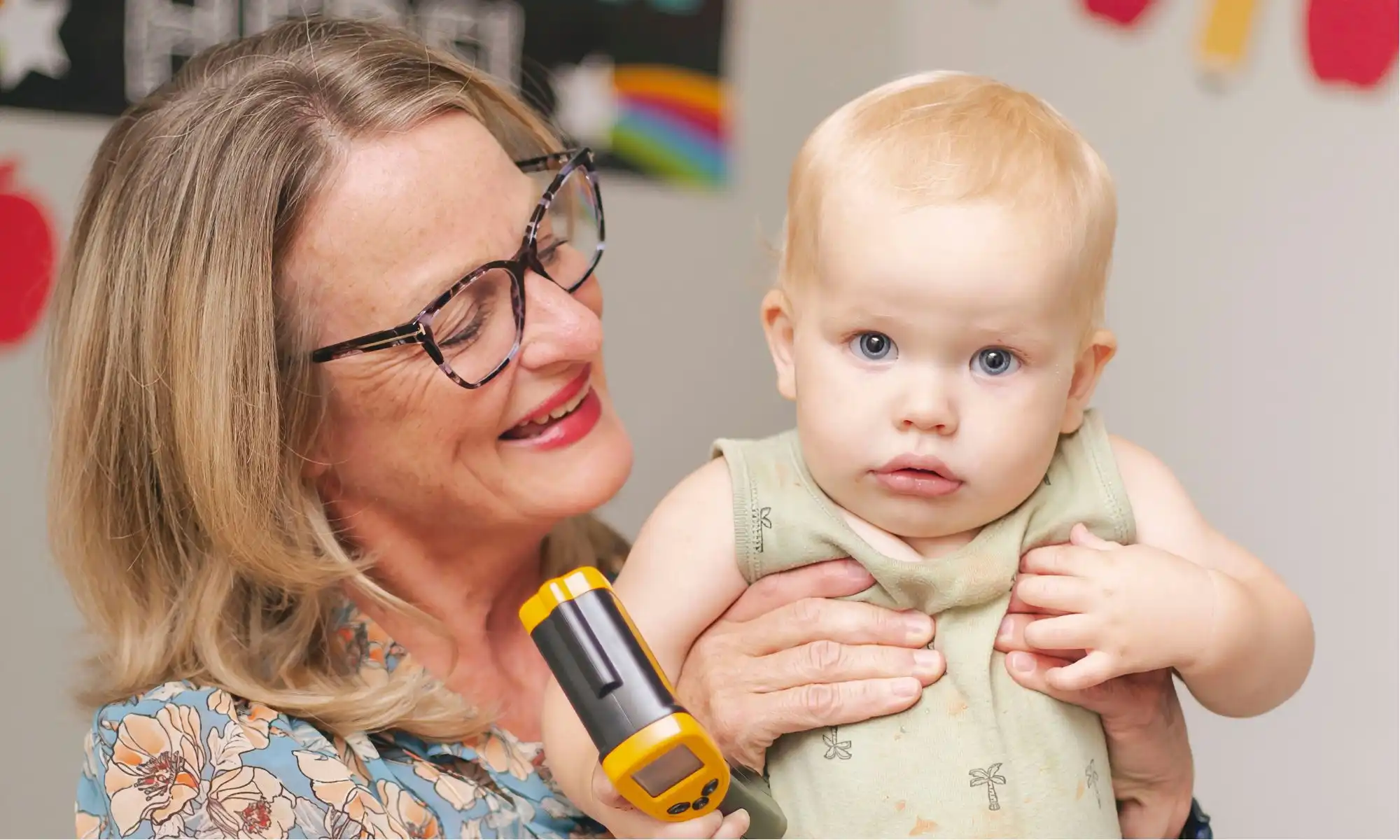
Thermal scanning measures temperature differences on either side of the spine. The autonomic nervous system regulates blood flow and temperature, so asymmetries in spinal temperature patterns indicate areas where autonomic nerve function is compromised.
For a child with bedwetting, INSiGHT scans often reveal stress patterns concentrated in the sacral and lower lumbar regions — exactly where the bladder control nerve roots originate. This objective data does two things: it helps Dr. Cindy identify exactly where to focus care, and it gives parents a concrete, visual picture of what's happening neurologically in their child's body. For many Omaha families, seeing that scan is the moment the connection between nervous system function and bedwetting finally clicks.
Follow-up scans track changes in nervous system function over the course of care, providing objective evidence of progress alongside the clinical outcomes families are observing at home.
What Gentle Chiropractic Adjustments Look Like for Children
Parents who haven't experienced pediatric chiropractic care often arrive at Dr. Cindy's Omaha office with understandable apprehension. What they find is an environment and an approach that feel nothing like what they imagined.
Dr. Cindy's practice operates out of a home office setting — intentionally designed to feel warm, personal, and far removed from the clinical sterility of a conventional medical environment. For children who are anxious about new experiences, this matters. The space is welcoming, the pace is unhurried, and Dr. Cindy takes the time to build rapport with every child before any assessment or adjustment begins.
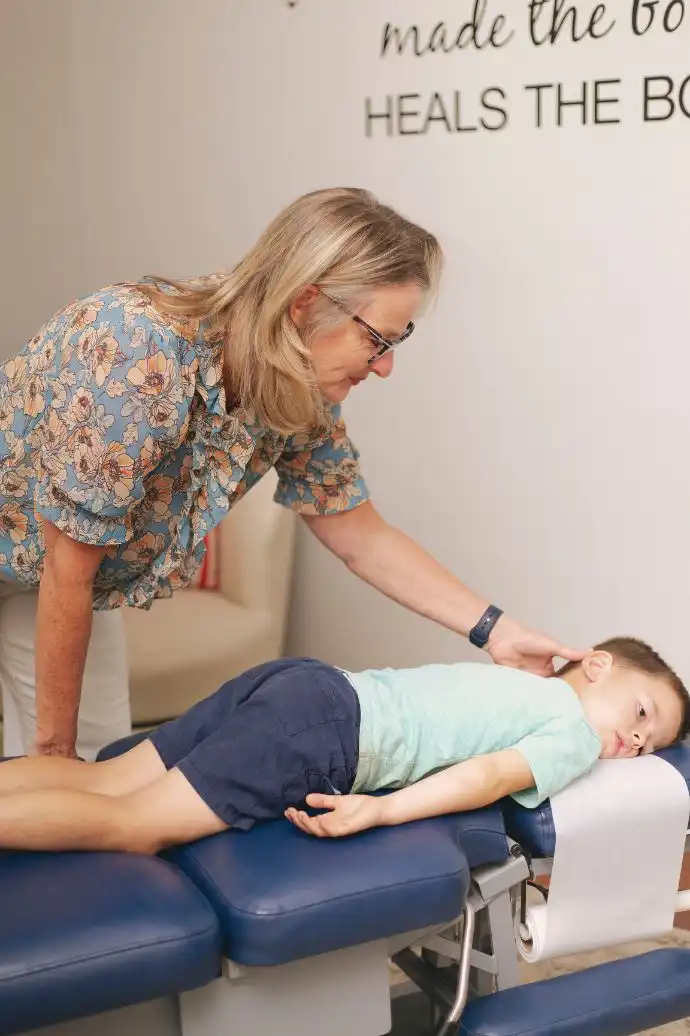
Pediatric chiropractic adjustments are extraordinarily gentle — particularly for the sacral region relevant to bladder function. The techniques used for children bear no resemblance to the forceful manipulations associated with adult chiropractic care. Light, specific pressure — often delivered with a fingertip or a small handheld instrument — is applied to the precise spinal segments identified through the INSiGHT scan and physical examination. The goal is a neurological input, not a mechanical force. Most children tolerate their adjustments easily and many look forward to their visits.
For younger children, the adjustment is often performed while they sit on a parent's lap or play on the table. Dr. Cindy is experienced at working with children at every developmental stage — from newborns to teenagers — and her home office environment in Omaha's Dundee neighborhood reflects her commitment to making families feel genuinely at ease.
What Omaha Families Can Realistically Expect
Dr. Cindy is honest with every family she works with: chiropractic care is not a guaranteed cure for bedwetting, and results vary from child to child depending on the underlying neurological patterns, the duration of the problem, and other contributing factors.
What the clinical literature on chiropractic care and enuresis — and Dr. Cindy's own clinical experience in Omaha — consistently shows is that a meaningful percentage of children with bedwetting respond positively to chiropractic care addressing sacral subluxation. Some families report significant reduction in wet nights within the first few weeks of care. Others see gradual improvement over a longer course of treatment. Progress is tracked objectively through INSiGHT rescans alongside the outcomes families report at home.
What chiropractic care offers that no alarm or medication provides is an address of the underlying neurological dysfunction. Even in cases where bedwetting doesn't fully resolve, improving sacral nerve function supports the child's overall neurological health — with benefits that extend well beyond bladder control.
Bedwetting's Impact on Children — and Why It's Worth Addressing
It would be easy to treat bedwetting as a purely physical problem. But for the children living with it — especially older kids approaching the ages where sleepovers, camp, and peer awareness become significant — the emotional and psychological impact is real and worth taking seriously.
Children who wet the bed are more likely to experience low self-esteem, anxiety about social situations, and feelings of shame that they rarely articulate but carry quietly. Parents in Omaha who bring their children to Dr. Cindy often mention that their child's bedwetting has started affecting their willingness to spend the night at friends' houses, their comfort at school, or their overall confidence.
Addressing bedwetting — from the root cause, naturally, without shaming the child with alarms that announce every accident — is an investment in your child's emotional development, not just their bladder function.
A Practice Built Around Families in Omaha
Frazier Family Chiropractic has been a trusted resource for families in Omaha and the surrounding area, with Dr. Cindy's home office in the Dundee neighborhood offering the kind of personal, unhurried care that larger clinical settings simply can't replicate. Dr. Cindy sees children at every stage — newborns, toddlers, school-age kids, and teenagers — as well as pregnant patients and adults seeking root-cause chiropractic care.
If your child has been struggling with bedwetting and you're ready to explore whether a neurological component might be contributing, the first step is a conversation with Dr. Cindy. The INSiGHT scan will give you objective data. The consultation will give you clarity. And the care plan will be built specifically around your child — not a protocol, not a one-size-fits-all approach, but a personalized path forward designed for your family.
Find Us in Omaha
Frazier Family Chiropractic is located at 105 N 54th St, Omaha, NE 68132, in the Dundee neighborhood — a warm, home office setting that Omaha families have come to love.
Frazier Family Chiropractic 105 N 54th St, Omaha, NE 68132 📞 (402) 650-0090 🌐 frazierchiro.com
Serving Omaha families — including the Dundee neighborhood and surrounding communities — with gentle, root-cause chiropractic care for children, pregnant patients, and the whole family.
Found this helpful? Share with others!